Monday, 15 March 2010

Preparation for Death - Consideration XII

The Importance of Salvation.
“But we entreat ye, brethren, . . . that you attend to your own business.” – I Thess. iv. 10,11.
FIRST POINT.
Salvation is our own most important Affair.
The business of eternal salvation is to us the most important of all affairs; but it is also the most neglected by Christians. They are diligent, and lose no time in seeking to gain a lawsuit, or a situation of emolument. How many measures taken to attain these objects? How many means adopted? They neither eat nor sleep. And what efforts do they make to secure their eternal salvation? How do they live? To save their souls, the greater number of Christians do nothing; on the contrary, they do everything to bring their souls to perdition; they live as if death, judgment, hell, heaven, and eternity were not truths of faith, but fables invented by the poets. If a person lose a lawsuit, or a harvest crop, how great is his pain and distress of mind? With what zeal does he labor to repair the loss? If worldlings lose a horse, or a dog, with what diligence do they seek after it? But if they lose the grace of God, they sleep, and jest, and laugh. All blush at being told that they neglect their worldly affairs, but how few are ashamed to neglect the business of eternity, which is the most important of all. The worldling says that the saints were truly wise, because they sought only the salvation of their souls; and still he attends to all worldly business, but utterly neglects the concerns of the soul. Brethren, says St. Paul, let the great business of your eternal salvation be the sole object of all your care.1 This is to you the most important of all affairs. Let us then be persuaded that eternal salvation is for us the most important affair,—the only affair,—and that if once neglected it is an irreparable affair if we ever make a mistake.
It is the most important affair, because if the soul be lost, all is lost. We ought to set a higher value on the soul than on all the goods of the earth. “The soul,” says St. Chrysostom, “is more precious than the whole world!”2 To be convinced of this truth, it is enough to know that God himself has condemned his Son to death in order to save our souls. The Eternal Word has not refused to purchase them with his own blood.3 Hence a holy Father says that man appears to be of as much value as God.4 Hence Jesus Christ has asked: What exchange shall a man give for his soul?5 For God so loved the world as to give His only begotten Son.6 If then such is the value of the soul, for what earthly good shall a man exchange and lose it?
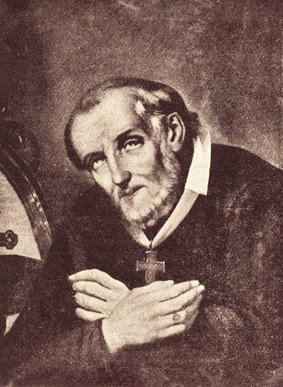
St. Philip Neri with reason could say that he who does not attend to the salvation of his soul is a fool. Were there on this earth two classes of men, one mortal and the other immortal, and were the former to see the latter seeking after the things of this world, its honors, goods, and amusements, they should certainly exclaim: O fools that you are! you have it in your power to acquire eternal riches, and do you fix your thoughts on those miserable and transitory things? Will you, for these, condemn yourselves, to an eternity of torments in the next life? Leave us, for whom all shall end at death, to seek after these earthly goods. But no; we are all immortal. How then does it happen that so many lose their souls for the miserable pleasures of this life? How does it come to pass, says Salvian, that Christians believe in judgment, hell, and eternity, and still live as if they feared them not?
Affections and Prayers.
Ah, my God! how have I spent so many years, which Thou hast given me in order to secure my eternal salvation? Thou, my Redeemer, hast purchased my soul with Thy blood, and hast consigned it to me that I might attend to its salvation; and I have labored only for its perdition, by offending Thee who hast loved me so tenderly. I thank Thee for giving me time to be able to repair the great loss which I have suffered. I have lost my soul and Thy grace. Lord! I am sorry with my whole heart for my past offences, and I resolve, henceforth, to lose everything, even my life, rather than forfeit Thy friendship. I love Thee above all things, and I resolve always to love Thee, my Sovereign Good! who art worthy of infinite love. Assist me, my Jesus, that this purpose may not be like my past resolutions, to which I have been always unfaithful. Take me out of life rather than suffer me ever again to offend Thee, or ever to cease to love Thee. O Mary, my hope, after Jesus! save me by obtaining for me holy perseverance.
SECOND POINT.
Salvation is our only Affair.
The affair of eternal salvation is not only the most important, but it is the only affair to which we have to attend in this life. One thing is necessary.7 St. Bernard weeps over the blindness of Christians, who call the occupations of children trifles, and their own employments business. If the amusements of children be trifles, the employments of men are still greater follies. What, says the Redeemer, will it profit us to gain the whole world if we lose our souls?8 My brother, if you save your soul, it will do you no harm to have lived here in poverty, afflictions, and contempt; for then you will have no more sorrows, and you will be happy for all eternity. But if you lose your soul, what will it profit you, in hell, to have indulged in all the amusements of the world, and to have enjoyed its riches and honors? If the soul be lost, amusements, riches, and honors, are lost—all is lost.
What answer will you give on the day of account? Were a king to send an ambassador to a city to transact some important business, and were the legate, instead of attending to the charge intrusted to him, to spend all his time in banquets, comedies, and festivities, and thus injure the rights of his master, what account would the sovereign demand of him at his return? But, O God! how strict must be the account which the Lord will exact of him who, after being placed in this world, not to indulge in amusements, nor to acquire wealth and dignity, but to save his soul, has attended to everything except to his own salvation? Worldlings think of the present, but not of the future. St. Philip Neri conversing one day in Rome with Francis Zazzera, a young man of talent, who was attached to the world, said to him: “You will realize a great fortune; you will be a prelate, afterward, perhaps, a cardinal, and perhaps even Pope. But what must follow? what must follow? Go,” said the saint, “and meditate on these last words.” Francis went home, and after reflecting on the words what must follow? what must follow? he abandoned his secular pursuits, left the world, entered into the Congregation of St. Philip, and began to attend only to God.
It is our only affair, because we have but one soul. A prince asked, through his ambassador, a favor of Benedict XII., which could not be granted without sin. In answer, the Pope said—“Tell the prince that if I had two souls, I might, perhaps, lose one of them for him, and reserve the other for myself; but since I have but one, I cannot and will not lose it.” St. Francis Xavier used to say that there is but one good and one evil in the world: the former consists in the salvation of the soul, the latter in its damnation. St. Teresa used frequently to say to her nuns—“One soul, one eternity.” As if she said—One soul; if this be lost, all is lost; one eternity—the soul, if lost once, is lost forever. Hence David said—One thing have I asked of the Lord: this I will seek after, that I may dwell in the house of the Lord.9 Lord, I ask but one favor—save my soul, and I ask nothing else.
With fear and trembling work out your salvation.10 He that does not fear and tremble for his salvation will not be saved: to save the soul, it is necessary to labor, and to do violence to nature. The kingdom of heaven suffereth violence, and the violent bear it away.11 To obtain eternal glory, our life must be found at death conformable to the life of Jesus Christ. Hence we must be careful, on the one hand, to avoid the occasions of sin; and, on the other, to adopt the means necessary for the attainment of eternal life. All would wish to be saved without trouble. “The devil,” says St. Augustine, “sleeps not, but labors strenuously for your perdition: and will you slumber when your eternal happiness is at stake?”12
Affections and Prayers.
Ah, my God! I thank Thee, for making me now remain at Thy feet and not in hell, which I have so often deserved. But of what use would the life which Thou hast preserved be to me, should I continue to live without Thy grace. Ah! may this never be! I have turned my back upon Thee; I have lost Thee, O my Sovereign Good! I am sorry for it with my whole heart. Oh, that I had died a thousand times, rather than have offended Thee! I have lost Thee; but the prophet tells me that Thou art all goodness, and that Thou art easily found by the soul that seeks Thee. If I have hitherto fled away from Thee, I now seek Thee, and seek nothing but Thee. I love Thee with all the affections of my heart. Accept me. Do not disdain to give Thy love to a soul that has at one time despised Thee. Teach me what I must do in order to please Thee; I am ready and willing to do it. Ah, my Jesus! save this soul for which Thou hast given Thy blood and Thy life; and, in order to save me, give me the grace always to love Thee in this and in the next life. This grace I hope for through Thy merits. For this I also hope, O Mary! through thy intercession.
THIRD POINT.
A Failure in Saving One’s Soul is an Irremediable Evil.
Important affair! only affair! irreparable affair! No error, says St. Eucherius, can be compared with the error of neglecting eternal salvation. For all other errors there is a remedy: if you lose property in one way, you may recover it in another; if you lose a situation, there may be some means of afterwards regaining it; if you soon lose your life, provided your soul be saved, all is safe. But if you lose your soul the loss is irreparable. Death happens but once; the soul, if once lost, is lost forever. Nothing remains but to weep for eternity with the other miserable wretches in hell, where their greatest torment consists in the conviction, that the time of repairing their ruin is gone forever. The summer is over, and we are not saved.13 Ask the worldly wise who are now in the pit of fire, what are their present sentiments; ask them if, now that they are condemned to that eternal prison, they feel happy at having made a fortune in this life. Listen to their wailing and lamentation: We have erred.14 But of what use is it to know their error, now that there is no remedy for their eternal damnation? Should a man who could have preserved his palace at a small expense find it in ruins, how great would be his pain in reflecting on his own negligence, and on the impossibility of repairing the evil!
The greatest torment of the damned consists in the thought of having lost their soul, and of being damned through their own fault. Destruction is thy own, O Israel; thy help is only in me.15 St. Teresa says that if a person loses through his own fault a ring or even a trifle, his peace is disturbed; he neither eats nor sleeps. O God! how great will be the torture of the damned Christian when, on entering hell and finding himself shut up in that dungeon of torments, he reflects on his misfortune, and sees that for all eternity there will be no relief, no mitigation of pain! He will say, “I have lost my soul, paradise, and God; I have lost all forever! And why? Through my own fault.”
But you will say—If I commit this sin, why should I not expect to escape damnation? I may still be saved. Yes; but you may also be damned: and it is more likely that you will be lost, for the Scriptures menace eternal woes to all obstinate traitors, such as you are in your present dispositions. Woe to you, apostate children, saith the Lord.16 Woe to them, for they have departed from me.17 By committing this sin, you at least expose your eternal salvation to great danger. And is this an affair to be exposed to risk? There is not question of a house, of a villa, or of a situation: there is question, says St. John Chrysostom, of being sent into an eternity of torments, and of losing an eternity of glory. And will you risk on a perhaps this business of sovereign importance?
You say: Perhaps I shall not be lost: I hope that God will hereafter pardon me. But what happens in the mean time? You condemn yourself to hell. Tell me, would you cast yourself into a deep pool of water, saying, perhaps I shall not be drowned? Surely you would not: why then should you trust your eternal salvation to such a groundless hope, to a perhaps? Oh! how many has this accursed hope sent to hell! Do you not know that the hope of those who are obstinately determined to commit sin is not hope, but an illusion and presumption which move God not to mercy but to greater wrath? If you say that you are now unable to resist the temptation and passion to whose domination you submit, how will you resist them hereafter, when, by yielding to sin, your strength will not be increased, but greatly diminished? For, on the one hand, your own malice will render you more blind and obdurate; and, on the other, the divine helps will be withheld. Do you expect that the more you multiply sins and insults against God, the more abundantly he will pour upon you his lights and graces?
Affections and Prayers.
Ah, my Jesus! remind me always of the death Thou hast suffered for me, and give me confidence. I tremble lest the devil should make me despair at death by bringing before my view the many acts of treason I have committed against Thee. How many promises have I made never more to offend Thee after the light Thou hast given me and, after all my promises, I have, with the hope of pardon, again turned my back upon Thee. Then, have I insulted Thee because Thou didst not chastise me? My Redeemer! give me a great sorrow for my sins before I leave this world. I am sorry, O Sovereign Good! for having offended Thee. I promised to die a thousand times rather than abandon Thee. But make me in the mean time feel that Thou hast said to me what Thou didst say to Magdalene—Thy sins are forgiven thee—by giving me, before death, a great sorrow for all my iniquities, otherwise I fear my death will be troubled and unhappy. Be not Thou a terror to me; Thou art my hope in the day of affliction.18 O my crucified Jesus! be not a terror to me in my last moments. If I die before I have wept over my sins and have loved Thee, Thy wounds and Thy blood will inspire me with fear rather than with confidence. I do not ask of Thee consolations and earthly goods during the remainder of my life; I ask of Thee sorrow and love. O my dear Saviour! hear my prayer for the sake of that love which made Thee offer Thy life in sacrifice for me on Calvary. Mary, my Mother! obtain for me these graces, along with holy perseverance till death.


1Rogamus vos . . . ut vestrum negotium agatis.
2“Anima est toto mundo pretiosior.” – In. 1 Cor. hom. 3.
3“Empti enim estis pretio magno.” – 1 Cor. vi. 20.
4“Tam copioso munere humana redemptio agitur, ut homo Deum valere videatur.” – De dilig. D. c. 6.
5“Quam dabit homo commutationem pro anima sua?” – Matt. xvi. 26.
6“Sic Deus dilexit mundum. ut Filium suurn unigertitum claret.” – John, iii. i6.
7“Porro unum est necessarium.” – Luke, x. 42.
8“Quid prodest homini, si mundum universum lucretur, animæ vero sum detrimentum patiatur?” – Matt. xvi. 26.
9“Unam petii a Domino, hanc requiram, ut inhabitem in domo Domini.” – Ps. xxvi. 4.
10“Cum metu et tremore vestram salutem operamini.” – Phil. ii. 12.
11“Regnum cœlorum vim patitur et violenti rapiunt illud.” – Matt. xi. 12.
12“Vigilat hostis, dormis tu?” – In Ps. 65.
13“Finita est æstas, et nos salvati non sumus.” – Jer. viii, 20.
14“Ergo erravimus.” – Wis. v. 6.
15“Perditio tua, Israel; tantummodo in me auxilium tuum.” – Osee, xiii. 9.
16“Væ, filii desertores, dicit Dominus.” – Isa. xxx. 1.
17“Væ eis, quoniam recesserunt.” – Osee, vii. 13.
18“Non sis tu mihi formidini, spes rnea tu in die afflictionis.” – Jer. xvii. 17.

Read more...

Thursday, 4 March 2010

Preparation for Death - Consideration XI

Value of Time.
“Son, observe the time.” – Ecclus. iv. 23.
FIRST POINT.
Time is a Treasure of the Earth.
Son, says the Holy Ghost, be careful to preserve time, which is the greatest and the most precious gift which God can bestow upon you in this life. The very pagans knew the value of time. Seneca said that “no price is an equivalent for it.”1 But the saints have understood its value still better. According to St. Bernardine of Sienna, a moment of time is of as much value as God; because in each moment a man can, by acts of contrition or of love, acquire the grace of God and eternal glory.2
Time is a treasure which is found only in this life; it is not found in the next, either in hell or in heaven. In hell the damned exclaim with tears: Oh! that an hour was given to us!3 They would pay any price for an hour of time, in which they might repair their ruin: but this hour they will never have. In heaven there is no weeping; but, were the saints capable of weeping, all their tears would arise from the thought of having lost the time in which they could have acquired greater glory, and from the conviction that this time will never again be given to them. A deceased Benedictine nun appeared in glory to a certain person, and said that she was perfectly happy, but that if she could desire anything, it would be to return to life, and to suffer pains and privations in order to merit an increase of glory. She added, that, for the glory which corresponds to a single Ave Maria, she would be content to endure till the day of judgment the painful illness which caused her death.
My brother, how do you spend your time? Why do you always defer till to-morrow what you can do to-day? Remember that the time which is past is no longer yours: the future is not under your control: you have only the present for the performance of good works. “Why, O miserable man,” says St. Bernard, do you presume on the future, as if the Father had placed time in your power?”4 St. Augustine asks: “How can you, who are not sure of an hour, promise yourself to-morrow?”5 If then, says St. Teresa, you are not prepared for death today, tremble lest you die an unhappy death.
Affections and Prayers.
O my God! I thank Thee for the time which Thou givest me to repair the disorders of my past life, Were I to die at this moment, the remembrance of the time I have lost should be one of my greatest torments. Ah, my Lord! Thou hast given me time to love Thee, and I have spent it in offending Thee. I deserve to be sent to hell from the first moment in which I turned my back upon Thee; but Thou hast called me to repentance, and hast pardoned me. I promised to offend Thee no more; but how often have I returned to sin? how often hast Thou pardoned my ungrateful relapses? Blessed forever be Thy mercy! If It were not infinite, how couldst Thou have had so much patience with me? Who could have borne with me so long? Oh! how sorry do I feel for having offended so good a God! My Saviour! the patience alone with which Thou didst wait for me ought to enamour me of Thee. Ah! do not suffer me to live any longer ungrateful to the love Thou hast had for me. Detach me from every creature, and draw me entirely to Thyself. O my God! I will no longer dissipate the time Thou givest me to repair the evil that I have done; I will spend it all in serving and loving Thee. Give me holy perseverance. I love Thee, O infinite Goodness, and hope to love Thee for eternity. I thank thee, O Mary! by thy advocacy thou hast obtained for me this time which is given to me. Assist me now, and obtain for me the grace to spend it all in loving thy Son, my Redeemer, and in loving thee, my queen and my mother.
SECOND POINT.
Neglect of Time.
There is nothing more precious than time; but there is nothing less esteemed and more despised by men of the world. This is what St. Bernard deplores when he says: “Nothing is more precious than time, but nothing is regarded more cheaply.”6 The same saint adds: “The days of salvation pass away, and no one reflects that the day which has passed away from him can never return.”7 You will see a gambler spend nights and days in play. If you ask him what he is doing, his answer is: I am passing the time. You will see others standing several hours in the street, looking at those who pass by, and speaking on obscene or on useless subjects. If you ask them what they are doing, they will say: We are passing the time. Poor blind sinners! who lose so many days; but days which never return.
O time despised during life! you will be ardently desired by worldlings at the hour of death. They will then wish for another year, another month, another day; but they will not obtain it: they will then be told that time shall be no longer. How much would they then pay for another week, or another day, to settle the accounts of their conscience? To obtain a single hour, they would, says St. Laurence Justinian, give all their wealth and worldly possessions.8 But this hour shall not be given. The assisting priest shall say to the dying sinner: Hasten, hasten your departure from this world; for your time is no more.
The prophet exhorts us to remember God, and to procure his friendship, before the light fails. Remember Thy Creator . . . before the sun and the light be darkened.9 How great the distress and misery of a traveler who, when the night has come, perceives that he has missed the way, and that there is no time to correct the mistake. Such at death will be the anguish of the sinner who has lived many years in the world, and has not spent them for God. The night cometh, when no man can work.10 For him, death shall be the night in which he will be able to do nothing. He hath called against me the time.11 Conscience will then remind the worldling of all the time that God gave him, and that he has spent in the destruction of his soul; of all the calls and graces that he has received from God for his sanctification, and that he has voluntarily abused. The sinner will then see that the way of salvation is closed forever. Hence he will weep and say: O fool that I have been! O time lost! O life misspent! O lost years, in which I could have, but have not, become a saint! And now the time of salvation is gone forever. But, of what use are these sighs and lamentations, when the scene is about to close,—the lamp on the point of being extinguished,—and when the dying sinner has reached that awful moment on which eternity depends?
Affections and Prayers.
Ah, my Jesus! Thou hast spent Thy whole life for the salvation of my soul. There has not been a single moment of Thy life in which Thou hast not offered Thyself to the eternal Father to obtain for me pardon and eternal glory, I have been so many years in the world, and how many of them have I hitherto spent for Thee? Ah! all that I remember to have done produces remorse of conscience. The evil has been great, the good very little, and all full of imperfections and tepidity, of self-love and distractions. Ah, my Redeemer! all this has arisen from my forgetfulness of what Thou hast done for me. I have forgotten Thee, but Thou hast not forgotten me; when I fled from Thee, Thou didst follow me, and call me so often to Thy love. Behold me, O Jesus! I will resist no longer. Shall I wait till Thou abandon me? I am sorry, O Sovereign Good! for having separated myself from Thee by sin. I love Thee, O infinite Goodness! worthy of infinite love. Ah! do not permit me ever again to lose this time, which Thou in Thy mercy givest me. Ah! remind me always, O my beloved Saviour! of the love Thou hast borne me, and of the pains Thou hast endured for me. Make me forget all things, that, during the remainder of my life, I may think only of loving and pleasing Thee. I love Thee, my Jesus, my love, my all! I promise, whenever Thou remindest me, to make acts of love. Give me holy perseverance. I place all my confidence in the merits of Thy blood. I also trust in thy intercession, O my dear Mother, Mary!
THIRD POINT.
We must Profit by the Time.
Walk whilst you have light.12 We must walk in the way of the Lord during life, now that we have light; for, at the hour of death this light is taken away. Death is not the time for preparing, but for finding ourselves prepared. Be ye ready. At the hour of death we can do nothing: what is then done is done. O God! were a person told that in a short time a trial should take place, on which would depend his life and his entire property, with what haste would he seek an able counsel to plead his cause! how little time would he lose in adopting every means of securing a favorable result! And what are we doing? We know for certain that the most important of all causes—the affair of eternal salvation—will soon be decided; the decision may take place every hour, and still we lose time.
Some may say: I am young; I will hereafter give myself to God. But remember that, as the Gospel remarks, the Lord cursed the fig-tree the first time he found it without fruit, although the season for figs had not arrived. By this Jesus Christ wished to signify that men should at all times, even in youth, bring forth fruits of good works; otherwise they will be accursed, and will never more bring forth fruit. May no man hereafter eat fruit of thee any more forever.13 Such the malediction of the Redeemer on the fruitless fig-tree, such is his malediction against all who resist his calls. Satan regards the whole time of our life as short, and, therefore, in tempting us he loses not a moment. The devil is come down unto you, having great wrath, knowing that he hath but a short time.14 Then the devil loses no time in seeking our perdition; and shall we lose the time given to us to secure our salvation?
Some will say, What evil am I doing? O God, is it not an evil to lose time in gaming, in useless conversations, which are unprofitable to the soul? Does God give you time, that you may squander it? No: the Holy Ghost says, Defraud not thyself of the good day, and let not the part of a good gift overpass thee.15 The workmen mentioned by St. Matthew, though they did no evil, but only lost time, were rebuked by the master of the vineyard. Why stand ye here all the day idle?16 On the day of judgment Jesus Christ will demand an account of every idle word. All the time that is not spent for God is lost time. “Believe,” says St. Bernard, “that you have lost all the time in which you have not thought of God.”17 Hence the Holy Ghost says, Whatsoever thy hand is able to do, do it earnestly, for neither work nor reason shall be in hell, whither thou art hastening.18 The Venerable Sister Jane of the Most Holy Trinity, of the Order of St. Teresa, used to say that, in the lives of the saints, there is no to-morrow. To-morrow is found in the lives of sinners, who always say, Hereafter, hereafter; and in this state they continue till death. Behold, now is the acceptable time.19 To-day, if you shall hear his voice, harden nor your hearts.20 If God call you to-day to do good, do it; for to-morrow it may happen that for you time will be no more, or that God will call you no more.
If you have hitherto spent the time in offending God, endeavor, like King Ezechias, to weep, during the remainder of your life, over your misspent years. I will recount to Thee all my years in the bitterness of my soul.21 God spares your life, that you may repair the time you have lost.22 In explaining this passage, St. Anselm says: “You will redeem the time if you do what you have neglected to do.”23 Of St. Paul, St. Jerome says that, though the last of the apostles, he was, on account of his great labors after he was called, the first in merits. Let us reflect that at each moment of time we may acquire new treasures of eternal riches. Were all the land round which you could walk, or all the money which you could count in a day, promised to you, would you not hasten to walk over the ground, or to count the money? At each moment you can acquire eternal treasures: will you, notwithstanding, squander your time? Say not what you can do to-day you will be able to do to-morrow; for this day will then be lost, and never return. When his companions spoke of the world, St. Francis Borgia conversed with God by holy affections; and so recollected was he, that when his opinion was asked on the subject of conversation, he knew not what to answer. Being corrected for this, he said: “I would rather be regarded stupid and unlearned, than lose time.”
Affections and Prayers.
No, my God, I will no longer lose the time which Thou in Thy mercy givest me. I should at this hour be in hell weeping without fruit. I thank Thee for having preserved my life: I wish during the remainder of my days to live only for Thee. Were I now in hell I should weep in despair, and without profit: I will now bewail the offences I have offered to Thee: and if I weep over them, I know for certain that Thou wilt pardon me. Of this the prophet assures me: Weeping, thou shalt not weep; He will surely have pity on thee.24 Were I in hell, I could never more love Thee; and now I love Thee, and hope always to love Thee. Were I in hell, I could ask no more graces; but now I hear Thee say: Ask, and ye shall receive. Since, then, I still have time to ask Thy graces, O God of my soul! I ask two graces: give me perseverance in Thy grace: give me Thy love; and then do with me what Thou pleasest; grant that in all the remaining moments of my life I may recommend myself to Thee, saying: Lord! assist me; have mercy on me; grant that I may never more offend Thee; make me love Thee. Most Holy Mary, my Mother! obtain for me the grace always to recommend myself to God, and to ask him for perseverance and for his holy love.


1“Nullum temporis pretium.” – De Brev. vit. c. 8.
2“Modico tempore potest homo lucrari gratiam et gloriam. Tempus tantum valet, quantum Deus, quippe tempore bene consumpto comparatur Deus.”
3“O,. si daretur hora!”
4“Quid de futuro, miser, præsumis, tamquam Pater tempora in tua posuerit potestate?” – De Cont. Mund. c. 16.
5Diem tenes, qui horam non tenes?
6Nihil pretiosius tempore sed nihil vilius æstimatur.
7Transeunt dies salutis, et nemo recogitat: nemo sibi non reditura momenta periisse causatur.” – De Cont. mundi, c. 16.
8“Mundi substantiam, honorem, voluptates, pro unius horæ spatio, commutarent.” – Dt Vit. sol. c. 10.
9“Memento Creatoris tui . . . antequam tenebrescat sol et lumen.” – Eccles. xii. 1.
10“Venit nox quando nemo potest operari.” – John, ix. 4.
11“Vocavit adversum me tempus.” – Lament. i. 15.
12Ambulate dum lucem habetis.” – John, xii. 35.
13“Jam non amplius in æternurn ex te fructum quisquam manducet.” – Mark, xi. 14.
14“Descendit diabolus ad vos habens iram magnam, sciens quod modicum tempus habet.” – Apoc, xii. 12.
15“Particula boni doni non te prxtereat.” – Ecclus. xiv. 14.
16“Quid hic statis iota die otiosi?” – Matt. xx. 6.
17Omne tempus in quo de Deo non cogitas, hoc te computes perdidisse.” – Medit., c. 6.
18“Quodcumque facere potest manus tua, instanter operate; quia nec opus, nec ratio . . . erunt apud inferos quo tu properas.” – Eccles. ix. 10.
19“Ecce nunc tempus acceptabile.” – 2 Cor. vi. 2.
20“Hodie si vocem ejus audieritis, nolite obdurare corda vestra.” – Ps. xciv. 8.
21“Recogitabo tibi omnes annos meos in amaritudine animæ meæ.” – Isa. xxxviii. 15.
22“Redimentes tempus quoniam dies mali sunt.” – Eph. v. 16.
23Tempus redimes, si, quæ facere neglexisti, facis.
24“Plorans nequaquam plorabis, miserans miserebitur tui.” – Isa. xxx. 19.

Read more...

Tuesday, 2 March 2010

Preparation for Death - Consideration X

Means of Preparing for Death.
“Remember thy last end, and thou shalt never sin.” – Eccl. vii. 40.
FIRST POINT.
Not to Wait till the Last Moment.
All confess that they must die, and die only once, and that nothing is of greater importance than to die well; because on death depends whether, we shall be forever in bliss or forever in despair. All know that our eternal happiness or our eternal unhappiness depends on leading a good or a bad life. How then does it happen that the greater part of Christians live as if they were never to die, or as if to die well or ill were of little moment! They live in sin because they do not think of death. Remember thy last end, and thou shalt never sin.1 We must be persuaded that the hour of death is not fit for settling the accounts of the soul, and securing the great affair of eternal salvation. In worldly matters prudent men take measures in due time to secure temporal gain—to obtain a situation of emolument. To preserve or restore bodily health the necessary remedies are not deferred a single moment. What would you say of the man who should put off his preparation for a trial on which his life depended till the day of trial arrived? Would you not stigmatize as a fool the general who should not begin to lay in a supply of provisions and arms till the city is besieged? Would it not be folly in a pilot to neglect till the time of the tempest, to provide the vessel with an anchor and a helm? Such precisely is the folly of the Christian who neglects to tranquillize his conscience till death arrives.
When sudden calamity shall fall on you, and destruction, as a tempest, then shall they call upon me, and I will not hear. . . . Therefore they shall eat the fruit of their own way.2 The time of death is a time of storm and confusion. At that awful hour sinners call on God for assistance; but they invoke his aid through the fear of hell, which they see at hand, and not with true contrition of heart. It is for this reason that God is deaf to their cry; it is for this reason also that they will then taste the fruit of their wicked life. What they have sown they shall reap.3 Ah! it will not then be enough to receive the sacraments; it is necessary at death to hate sin, and to love God above all things. But how can he, then, hate forbidden pleasures, who has loved them till that moment? How can he love God above all things, who has till then loved creatures more than he has loved God?
The Lord called the virgins foolish who wished to prepare their lamps when the bridegroom was nigh. All have a horror of a sudden death, because there is no time to settle the accounts of conscience. All confess that the saints have been truly wise, because they prepared for death during life. And what are we doing? Shall we expose ourselves to the danger of preparing for death when it arrives? We ought to do at present what we shall then wish to have done. Oh! what pain will then arise from the remembrance of time lost, and still more from the remembrance of time spent in sin: time given by God to merit eternal life but now past, and never to return! What anguish will the sinner feel when he shall be told: You can be steward no longer!4 There is no more time for doing penance, for frequenting the sacraments, for hearing sermons, for visiting Jesus Christ in the Holy Sacrament, or for prayer. What is done is done. To make a good confession, to remove several grievous scruples, and thus tranquillize the conscience, would require a better state of mind and time more free from confusion and agitation. But time will be no more.5
Affections and Prayers.
Ah, my God! had I died on one of the nights known to Thee, where should I be at present? I thank Thee for having waited for me; I thank Thee for all those moments which I should have spent in hell from the first moment that I offended Thee. Ah! give me light, and make me sensible of the great evil I have done Thee in voluntarily losing Thy grace, which Thou didst merit for me by the sacrifice of Thy life on the cross. Ah my Jesus, pardon me: I am sorry from the bottom of my heart, and above all things, for having despised Thee, who art infinite goodness. Ah! assist me, O my Saviour! that I may never lose Thee again. Alas, my Lord! if I return again to sin, after so many lights and graces which Thou hast bestowed upon me, I should deserve a hell to be made on purpose for myself. Through the merits of that blood which Thou hast shed for my sake, do not permit me ever more to offend Thee. Give me holy perseverance, give me Thy love. I love Thee, and I wilt never cease to love Thee till death. My God, have mercy on me for the love of Jesus Christ. O Mary, my hope! do thou too have pity on me; recommend me to God: thy recommendations are never rejected by that God who loves thee so tenderly.
SECOND POINT.
Put Our Conscience in a Good State, and Regulate Our Lives.
Brother, since it is certain that you will die, go as soon as possible to the foot of the crucifix; thank your crucified Redeemer for the time which in his mercy he gives you to settle the affairs of your conscience; and then review all the irregularities of your past life, particularly of your youth. Cast a glance at the commandments of God: examine yourself on the duties of the state of life in which you have lived, and on the society you have frequented: mark down in writing the sins you have committed; make a general confession of your whole life; if you have not as yet made one. Oh! how much does a general confession contribute to regularity of life in a Christian! Consider that you have to settle accounts for eternity; and take care to adjust them as if you were on the point of rendering these accounts to Jesus Christ at judgment. Banish from your heart every sinful affection, and every sentiment of rancor; remove every ground of scruple on account of the injury done to the property or character of others, or of scanda1 to your neighbor; and resolve to fly from all those occasions in which you should be in danger of losing God. Remember that what now seems difficult will appear impossible at the hour of death.
It is still more important for you to resolve to practise the means of preserving your soul in the grace of God. These means are,—hearing Mass every day, the meditation on the eternal truths, the frequentation of the sacraments of penance and Eucharist at least every eight days, the visit every day to the Most Holy Sacrament, and to an image of the divine Mother, attendance at her confraternity, spiritual reading, examination of conscience every evening, some special devotion to the Blessed Virgin, along with fasting every Saturday in her honor. Above all, resolve to recommend yourself frequently to God and to the Blessed Virgin, and frequently to invoke, in the time of temptations, the sacred names of Jesus and Mary. These are the names by which you will be able to secure a happy death, and to obtain eternal life.
The practice of these means will be for you a great sign of your predestination. And as to the past, trust in the blood of Jesus Christ, who now gives you these lights, because he desires your salvation; and trust in the intercession of Mary, who obtains these lights for you. Oh! if you adopt this mode of life; and place great confidence in Jesus and Mary, what aid will you receive from God, and what strength will your soul acquire! Dearly beloved reader, give yourself then instantly to God, who invites you, and begin to enjoy that peace of which you have been hitherto deprived through your own fault. And what greater peace can a soul enjoy than to be able to say, in going to rest at night: Should death come this night, I hope to die in the grace of God! How happy the man who, amid the terrors of thunder or of, earthquakes, is prepared to accept death with resignation, should God be pleased to send it!
Affections and Prayers.
Ah, my Lord! with what fervor do I thank Thee for the light which Thou gavest me! I have so often abandoned Thee and turned my back upon Thee; but Thou hast not abandoned me. Hadst Thou abandoned me I should now be blind, as I have hitherto wished to be; I should be obstinate In my sins, and should not have the desire either to renounce sin or to love Thee. I now feel a great sorrow for having offended Thee, a great desire to be in the state of grace. I feel a hatred of these accursed delights which have made me lose Thy friendship. These sentiments are all graces which come from thee, and make me hope that Thou wilt pardon and save me. Since, then; after all my sins, Thou hast not abandoned me—since Thou now wishest to save me, behold, O Lord! I give myself entirely to Thee. I am sorry, above all things, for having offended Thee; and I propose to lose life a thousand times rather than forfeit Thy grace. I love Thee, O my sovereign Good! I love Thee, O my Jesus! who hast died for me; and I hope in Thy blood, that Thou wilt not permit me to be ever again separated from Thee. O my Jesus! I will never more lose Thee. I wish to love Thee always during life. I wish to love Thee at death. I wish to love Thee for all eternity. Preserve me then, O Lord! at all times, and increase my love for Thee. This favor I ask through Thy merits. Mary, my hope! pray to Jesus for me.
THIRD POINT.
We must Detach Ourselves from the World.
It is also necessary to endeavor to be at all times in the state in which we desire to be at death. Blessed are the dead who die in the Lord.6 St. Ambrose says that they die well who, at the hour of death, are found dead to the world; that is, detached from the goods from which death will separate us by force. We ought then, from this moment, to accept the spoliation of our goods, and the separation from relatives and from everything in this world. Unless we do it voluntarily during life, we shall have to do it through necessity at death, but with extreme pain and great danger of eternal perdition. Hence St. Augustine says, that to settle during life all temporal matters, and dispose by will of all the goods we shall have to bequeath, contribute greatly to a tranquil death; because when all worldly affairs are already adjusted, the soul may be entirely occupied in uniting itself to God. At that hour, we should think and speak only of God and of Paradise. These last moments are too precious to be squandered in earthly thoughts. At death is completed the crown of the elect; for it is then, perhaps, that they reap the greatest harvest of merits, by embracing, with resignation and love, death and all its pains.
But the Christian who has not been in the habit of exciting these sentiments during life, will not have them at the hour of death. Hence some devout souls, with great spiritual profit to themselves, are accustomed to renew every month, after being at confession and Communion, the Protestation of death along with the Christian acts, imagining themselves at the point of death, and to be near their departure from this world.7 Unless you do this during life you will find it very difficult to do it at death. In her last illness, that great servant of God, Sister Catharine of St. Alberts, of the order of St. Teresa, sent forth a sigh, and said, “Sisters, I do not sigh through fear of death, for I have lived for twenty-five years in expectation of it; but I sigh at the sight of so many deluded Christians, who spend their life in sin, and reduce themselves to the necessity of making peace with God at death, when I can scarcely pronounce the name of Jesus.”
Examine then, O my brother, if you are now attached to anything on this earth, to any person, to any honor, to your house, to your money, to conversations or amusements; and reflect that you are not immortal. You must one day, and perhaps very soon, take leave of them all. Why then do you cherish any attachment to them, and thus expose yourself to the risk of an unhappy death? Offer from this moment all to God: tell him you are ready to give up all things whenever he pleases to deprive you of them. If you wish to die with resignation you must from this moment resign yourself to all the contradictions and adversities which may happen to you, and must divest yourself of all affections to earthly things. Imagine yourself on the bed of death, and you will despise all things in this world. “He,” says Jerome, “who always thinks that he is to die, easily despises all things.”8
If you have not yet chosen a state of life, make choice of that state of life which at death you will wish to have selected, and which will make you die with greater peace. If you have already made choice of a state of life, do now what at death you will wish to have done in that stare. Spend every day as if it were the last of your life; and perform every action, every exercise of prayer, make every confession and Communion, as if they were the last of your life. Imagine yourself every hour at the point of death, stretched on a bed, and that you hear that Proficiscere de hoc mundo which announces your departure from this world. Oh! how powerfully will this thought assist you to walk in the way of God, and to detach your heart from this earth! Blessed is that servant whom, when his Lord shall come, he shall find him so doing.9 He who expects death every hour will die well, though death should come suddenly upon him.
Affections and Prayers.
Every Christian ought to be prepared to say at the moment the news of death is announced to him: Then, my God, only a few hours remain; during the short remainder of the present life. I wish to love Thee to the utmost of my power, that I may love Thee more perfectly in heaven. But little remains for me to offer to Thee. I offer Thee these pains, and the sacrifice of my life in union with the sacrifice which Jesus Christ offered for me on the Cross. Lord! the pains which I suffer are few and light compared with what I have deserved; such as they are, I embrace them as a mark of the love which I bear Thee. Provided I am to love Thee for eternity, I resign myself to all the punishments which Thou wishest to send me in this or the next life. Chastise me as much as Thou pleasest, but do not deprive me of Thy love. I know that, on account of having so often despised Thy love, I deserved never more to love Thee; but Thou canst not reject a penitent soul. I am sorry, O Sovereign Good! for having offended Thee. I love Thee with my whole heart, and place all my trust in Thee. Thy death, O my Redeemer! is my hope. To Thy wounded hands I recommend my soul. Into Thy hands I commend my spirit: Thou hast redeemed me, O Lord, the God of Truth.10 O my Jesus, Thou hast given Thy blood for my salvation: do not suffer me to be separated from Thee. I love Thee, O eternal God, and hope to love Thee for eternity. Mary, my Mother, assist me at the awful moment of death. To thee I now consign my spirit; to thee I recommend myself. Deliver me from hell.


1“In omnibus operibus tuis memorare novissima tua, et in æternum non peccabis.” – Ecclus. vii. 40.
2“Cum . . . interitus quasi tempestas ingruerit . . ., tunc invocabunt me, et non exaudiam . . .; comedent fructus vim suæ.” – Prov. i. 27.
3“Quæ seminaverit homo, hæc et metet. “ – Gal. vi. 8.
4“Jam non poteris amplius villicare.” – Luke, xvi. 2.
5“Tempus non erit amplius.” – Apoc. x. 6.
6“Beati mortui qui in Domino moriuntur.” – Apoc. xiv. 13.
7The formula of this PROTESTATION is to be found in the post "A Christian’s Rule of Life - Chapter 4."
8“Facile contemnit omnia, qui se semper cogitat esse moriturum.” – Ep. ad Paulin.
9“Beatus ille servus, quem, cum venerit Dominus ejus, invenerit sic facientem.” – Matt. xxiv. 46.
10“In manus tuas commendo, spiritum meum; redemisti me, Domine Deus veritatis.” – Ps. xxx. 6.

Read more...

Monday, 1 March 2010

Preparation for Death - Consideration IX

Peace of the Just at the Hour of Death.
“The souls of the just are in the hands of God, and the torment of death shall not touch them. In the sight of the unwise they seemed to die; but they are in peace.” – Wis. iii. 1, etc.
FIRST POINT.
The Just have nothing to fear at the Hour of Death,
The souls of the just are in the hands of God. If God holds fast in his hands the souls of the just, who can snatch them from him? It is true that hell does not cease to tempt and attack even the saints at the hour of death; but it also true that God does not cease to assist, and to multiply helps to his faithful servants, whenever their danger is increased. “There,” says St. Ambrose, “is greater aid, where there is greater peril, because God is a helper in due time.”1 David also assures us in the Psalms: A helper in time of tribulation.2 The servant of Eliseus was struck with terror when he saw the city encompassed with enemies; but the saint inspired him with courage, saying: Fear not: for there are more with us than with them.3 He then showed him an army of angels sent by God to defend the city. The devil will come to tempt the dying Christian; but his angel-guardian will come to strengthen him: his holy advocates Will come—St. Michael, whom God has appointed to defend his faithful servants in their last combat with hell, will come; the divine Mother will come to chase away the devils, and to protect her servant; above all, Jesus Christ will come to guard against every temptation of hell, the innocent or penitent sheep for whose salvation he has given his life. He will give that confidence and strength of which the soul shall stand in need in that last struggle with its enemies. Hence, full of courage, it will say: The Lord became my helper.4 The Lord is my light and my salvation; whom shall I fear?5 God, says Origen, is more solicitous for our salvation than the devil is for our perdition; for the Lord loves our souls far more than the devil hates them.6
God is faithful, says the Apostle;-he does not permit us to be tempted above our strength.7 But you will say: Many saints have died with great fear of being lost. I answer: We have but few examples of persons who, after leading a holy life, died with fears for their eternal salvation. Belluacensis says that, to purify them at the hour of death from some defect, God sometimes permits holy souls to be disturbed by such fears.8 But generally the servants of God have died with a joyful countenance. At death the judgment of God excites fear in all; but if sinners pass from terror to despair, the saints rise from fear to confidence. St. Antonine relates that in a severe illness, St. Bernard trembled through fear of judgment, and was tempted to despair. But thinking of the merits of Jesus Christ, he drove away all fear, saying to his Saviour: Thy wounds are my merits.9 St. Hilarion also was seized with fear; but he said: “Go forth, my soul; what do you fear? For near seventy years you have served Christ; and are you now afraid of death?”10 As if he said: My soul, what do you fear? have you not served a God who is faithful, and knows not how to abandon at death the Christian who has been faithful to him during life? Father Joseph Scamacca, of the Society of Jesus, being asked if in dying he felt confidence in God, said: “Have I served Mahomet, that I should now doubt of the goodness of my God, or of his desire to save me?
Should the thought of having offended God at some time of our life molest us at death, let us remember that he has protested that he forgets the iniquities of all penitent sinners. If the wicked do penance,—I will not remember all his iniquities.11 But you may ask: How can I be secure of having received pardon from God? St. Basil asks the same question: How can any one be certain that God has forgiven his sins?”12 “He can be certain of pardon.” answers the saint; “if he say: I have hated and abhorred iniquity.”13 He who detests sin, can rest secure of having obtained pardon from God. The heart of man cannot exist without loving some object; it must love creatures or God, If it loves not creatures, it loves God. And who are they that love God? All who observe his commands. He that hath my commandments, and keepth them, he it is that loveth me.14 He then who dies in the observance of the commandments, dies in the love of God; and he that loves fears not. Charity casteth out fear.15
Affections and Prayers.
Ah, my Jesus! when will the day arrive on which I can say: My God! I can never lose Thee? When shall I see Thee face to face, and be sure of loving Thee with all my strength for eternity? Ah, my Sovereign Good, my only love! as long as I have life, I shall be in danger of offending Thee and of losing Thy grace. There has been an unhappy time when I did not love Thee, but, on the contrary, despised Thy love. I am sorry for it with my whole soul, and hope that Thou hast already pardoned me. I now love Thee with my whole heart, and desire to do all in my power to love and please Thee. But I am still in danger of refusing Thee my love, and of again turning my back upon Thee. Ah, my Jesus, my life and my treasure! do not permit it. Should this misfortune ever happen to me, take me this moment out of life by the most cruel of deaths; I am content to suffer such a death, and I entreat Thee to send me such a death, sooner than permit me ever to cease to love Thee. Eternal Father! for the love of Jesus Christ, do not abandon me to so great an evil. Chastise me as Thou wishest, I deserve and accept any chastisement Thou pleasest to inflict upon me: but preserve me from the punishment of seeing myself deprived of Thy grace and of Thy love. My Jesus! recommend me to Thy Father. Mary, my Mother! recommend me to thy Son; obtain for me perseverance in his friendship, and the grace to love him; and then do with me what thou pleasest.
SECOND POINT.
The Just Die in a Sweet Peace.
The souls of the just are in the hand of God, and the torment of death shall not touch them. In the sight of the unwise they seemed to die; . . . but they are in peace.16 In the eyes of the unwise the servants of God appear to die, as worldlings do, in sorrow and with reluctance. But God knows well how to console his children in their last moments; and even in the midst of the pains of death he infuses into their souls certain sweetnesses, as foretastes of Paradise, which he will soon bestow upon them. As they who die in sin begin to experience on the bed of death certain foretastes of hell, certain remorse, terrors, and fits of despair; so, on the other hand, the saints, by the frequent acts of divine love which they then make, by their ardent desire and firm hope of soon possessing God, begin to feel that peace which they will afterwards fully enjoy in heaven. To the saints death is not a punishment, but a reward. When He shall give sleep to His beloved, behold the inheritance of the Lord.17 The death of the Christian that loves God is called, not death, but sleep, thus he shall be able to say less, In peace in the selfsame I will sleep and I will rest.18
Father Suarez died with so much peace, that in his last moments he exclaimed: “I could never imagine that death would be so sweet.”19 When Cardinal Baronius was advised by his physician not to fix his thoughts so much on death, he said: “Perhaps you think I am afraid of death. I fear it not; but, on the contrary, I love it.” In going to death for the faith, the Cardinal of Rochester, as Saunders relates, put on his best clothes, saying that he was going to a nuptial feast. Hence at the sight of the scaffold he threw away his staff, and said: “O my feet! walk fast; we are not far from Paradise.”20 Before death he intoned the “Te Deum,” to thank God for giving him the grace to die a martyr for the holy faith; and, full of joy, he laid his head on the block. St. Francis of Assisi began to sing at the hour of death, and invited the brethren to join him. Brother Elias said to him: “Father, at death we ought rather to weep than to sing.” “But,” replied the saint, “I cannot abstain from singing; for I see that I shall soon go to enjoy my God.” A Young nun of the order of St. Teresa, in her last illness said to her sisters in religion who stood round her bed bathed in tears: “O God! why do you weep? I go to enjoy my Jesus. If you love me, rejoice with me.”
Father Granada relates that a certain sportsman found a solitary infected with leprosy, singing in his last agony. “How,” said the sportsman, “can you sing in such a state?” “Brother,” replied the hermit, “between me and God there is nothing but the wall of this body. I now see that my flesh is falling off—that the prison will soon be destroyed, and that I shall go to see my God. It is for this reason that I rejoice and sing.” The desire of seeing God made St. Ignatius the Martyr say that if the wild beasts should not take away his life he would provoke them to devour him.21 St. Catharine of Genoa could not bear to hear death called a misfortune. Hence she would say: “Oh! beloved death, in what a mistaken light are you viewed! Why do you not come to me? I call on you night and day.” St. Teresa desired death so vehemently that she regarded the continuation of life as death hence she composed the celebrated hymn, I die because I do not die. Such is death to the saints.
Affections and Prayers.
Ah, my supreme good, my God! if for the past I have not loved Thee, I now turn to Thee with my whole soul. I take leave of all creatures, and choose Thee, my most amiable Lord! for the sole object of my love. Tell me what Thou wishest from me: I will do all Thou desirest. I have offended Thee enough: I wish to spend all the remaining moments of life in pleasing Thee. Give me grace to compensate by my love my past ingratitude, which has continued to this moment. I deserve to burn in the fire of hell for so many years; Thou hast sought after me, and hast drawn me to Thyself. Make me now burn with the fire of Thy holy love. I love Thee, O Infinite Goodness! Thou justly claimest all the affections of my heart; for Thou hast loved me more than all others have loved me. Thou alone deservest my love; Thou only do I wish to love. I desire to do everything in my power to please Thee. Do with me whatsoever Thou wishest. For me it is enough to love Thee and to be loved by Thee. Mary, my Mother! assist me; pray to Jesus for me.
THIRD POINT.
The Just in Dying have a Foretaste of Celestial Joy.
And how can he fear death, says St. Cyprian, who hopes to receive a kingly crown in Paradise! “Let us not be afraid to be put to death when we are certain that we shall be crowned after death.”22 How can he fear death when he knows that by dying in the state of grace his body will become immortal? This mortal must put on immortality.23 He that loves God and desires to see him, regards life as a punishment and death as a source of joy, says St. Augustine.24 And St. Thomas of Villanova says that death, if it finds a man sleeping, comes like a thief, robs him, kills him, and casts him into the pit of hell. But if it finds him watching, it comes as an ambassador from God, and salutes him, saying: “The Lord expects you to the nuptial feast: come; I will conduct you to the happy kingdom for which you sigh.”25
Oh! with joy does he expect death who finds himself in the grace of God, and hopes soon to see Jesus Christ, and to hear from him these consoling words: Well done, good and faithful servant; because thou hast been faithful over a few things, I will place thee over many.26 Oh, what consolation will he then receive from his works of penance, his prayers, his detachment from earthly goods, and from all he has done for God! Say to the just man, that it is well; for he shall eat the fruit of his doings.27 Then he who has loved God will taste the fruit of all his holy works. Hence, in hearing that a religious, his friend, died in sentiments of fervent piety, Father Hyppolitus Durazzo, of the Society of Jesus, wept not, but exulted with joy and gladness. But, says St. John Chrysostom, would it not be most unreasonable to believe that heaven is eternal, and to pity those who go to that kingdom of delights?28 What special consolation will the just man receive at the hour of death from the devotions performed in honor of the Mother of God, from the Rosaries he has recited, from his visits to her image, from his fasts on Saturdays, from his frequent attendance at her Confraternities! Mary is called the faithful Virgin. Oh, how great is her fidelity in consoling her faithful servants at the hour of death! A certain person devoted to the Most Holy Virgin said in his last moments to Father Binetti: “Father, you cannot conceive the consolation which the thought of having served Mary infuses at the hour of death. O my Father! if you knew the happiness I feel on account of having served this Mother. I am not able to express it.” How great will be the joy of him who has loved Jesus Christ—who has often visited him in the Most Adorable Sacrament, and has often received him in the Holy Communion, when he sees his Lord entering his room in the Most Holy Viaticum, and coming to accompany him in his passage to eternity! Happy he who will then be able, with St. Philip Neri, to say to his Saviour: “Behold my love! Behold my love! Give me my love.”
But you will, perhaps, say: Who knows what shall be my lot? Who knows but I shall die an unhappy death? Of you who speak in this manner, I ask what is it that causes a bad death? Nothing but Sin. We should then fear sin only, and not death. “It is clear,” says St. Ambrose, “that it is not death that is bitter, but sin; our fears ought not to be of death, but of life.”29 If, then, you desire not to fear death, lead a holy life. With him that feareth the Lord, it shall go well in the latter end.30
Father Colombière held it to be morally impossible that the man who has been faithful to God during life should die a bad death. And before him, St. Augustine said: “He who has lived well cannot die badly. He who is prepared to die fears no death, however sudden.”31 The just man, if he be prevented with death, shall be in rest.32 Since we cannot go to enjoy God without passing through death, St. John Chrysostom exhorts us to offer to God what we are obliged to give him.33 And let us be persuaded that they who offer their death to God, make the most perfect act of divine love which it is in their power to perform; because, by cheerfully embracing that kind of death which God is pleased to send, and at the time and in the manner in which God sends it, they render themselves like the holy martyrs. He who loves God should desire and sigh after death; because it unites him forever to God, and delivers him from the danger of losing God. He who does not desire to see God speedily, and to be secure against the possibility of ever losing God, shows that he has but little love for God. Let us, during life, love him to the utmost of our power. We should make use of life only to advance in divine love: the measure of our love of God at death will be the measure of our love for him in a happy eternity.
Affections and Prayers.
My Jesus! bind me to Thyself so that I may never more be separated from Thee. Make me entirely Thine before I die, that I may see Thee appeased, O my Redeemer! the first time I behold Thee. Thou didst seek after me when I fled away from Thee: ah! do not cast me off, now that I seek after Thee. Pardon me all the offences I have given Thee. From this day I will think only of serving and loving Thee. Thou hast laid me under too many obligations; Thou hast not refused to give Thy blood and Thy life for the love of me. I would wish to be entirely consumed for the love of Thee. O God of my soul! I wish to love Thee ardently in this life, that I may love Thee ardently in the next. Eternal Father! draw my whole heart to Thee: detach it from earthly affections: wound and inflame my whole soul with Thy holy love. Through the merits of Jesus Christ, hear my prayers. Give me holy perseverance, and grant me the grace always to ask it of Thee. Mary, my Mother! assist me, and obtain for me the grace to ask unceasingly of thy Son the gift of holy perseverance.


1“Ibi plus auxilii, ubi plus periculi.” – De Jos. patr. c. 5.
2“Dominus . . . adjutor in opportunitatibus.” – Ps. ix. 10.
3“Noli timere, plures enim nobiscum sunt, quam cum illis.” – 4 Kings, vi. 16.
4“Dominus factus est adjutor meus.” – Ps. xxix. 11.
5“Dominus illuminatio mea et salus mea; quem timebo?” – Ps. xxvi. 1.
6“Major illi cura est, ut nos ad salutem pertrahat quam diabolo ut nos ad damnationem impellat.” – In Num. Hom. 20.
7“Fidelis Deus non patietur vos tentari supra id quod potestis.” – 1 Cor. x. 13.
8“Justi quandoque dure moriendo purgantur in hoc mundo.” – Spec. mor. l. 2. p. 1. d. 3.
9“Vulnera tua, merita mea.”
10“Egredere, anima mea; quid times? Septuaginta prope annis servisti Christo, et mortem times?”
11“Si impius egerit pœnitentiam, . . . omnium iniquitatum ejus . . . non recordabor.” – Ezek. xviii. 21.
12“Quomodo certo persuasus esse quis potest, quod Deus ei peccata dimiserit?”
13“Nimirum si dicat: Iniquitatem odio habui et abominatus sum.” – Reg. brev. interr. 12.
14“Qui habet mandata mea et servat ea, ille est qui diligit me.” – John, xiv. 21.
15“Charitas foras mittit timorem.” – 1 John, iv. 18.
16“Justorum animæ in manu Dei sunt, et non tanget illos tormentum mortis; visi sunt oculis insipientium mori . . illi autem sunt in pace.” – Wis. iii. 1.
17“Cum dederit dilectis suis somnum, ecce hereditas Domini.” – Ps. cxxvi. 2.
18“In pace in idipsum dormiam et requiescam.” – Ps. iv. 9.
19Non putabam tam dulce esse mori.
20Ite, pedes; parum a paradiso distamus.
21Ego vim faciam ut devorer.
22“Non vereamur occidi, quos constet quando occidimur, coronari?” – Epis. ad Thibar.
23“Oportet . . . mortale hoc induere immortalitatem.” – 1 Cor. xv. 55.
24“Patienter vivit, delectabiliter moritur.” – In 1 Joh, tr. 9.
25“Te Dominus ad nuptias vocat; veni, ducam te quo desideras.” – De S. Ildeph. conc. 2.
26“Euge, serve bone et fidelis: quia super pauca fuisti fidelis, super multa te constituam; intra in gaudium Domini tui.” – Matt. xxv. 21.
27“Dicite justo quoniam bene: quoniam fructum adinventionum suarum comedet.” – Isa. iii. 10.
28“Fateri cœlum et eos, qui hinc eo commearunt luctu prosequi.” – Ad Vid. jun. tr. 1.
29“Liquet acerbitatem non mortis esse, sed culpæ: non ad mortem metus referendus, sed ad vitam.” – De bon. mort. c. 8.
30“Timenti Dominum bene erit in extremis.” – Ecclus. i. 13.
31“Non potest male mori, qui bene vixerit.” – De Disc. chr., c. 12.
32“Justus autem, si morte præoccupatus fuerit, in refrigerio erit.” – Wis. iv. 7.
33“Offeramus Deo quod tenemur reddere.” – Op. imp. in Matth. hom. 25.

Read more...

About This Blog

  © Blogger templates The Professional Template by Ourblogtemplates.com 2008

Back to TOP